
The RWS Community Center is the center of life
in villages ravaged by Hurricane Irene
…….WITH SLIDE SHOW
By ANNE C. BOWERS
By ANNE C. BOWERS
Every big storm, whether it is a northeaster, tropical storm, or a full-blown Hurricane, has its own signature.
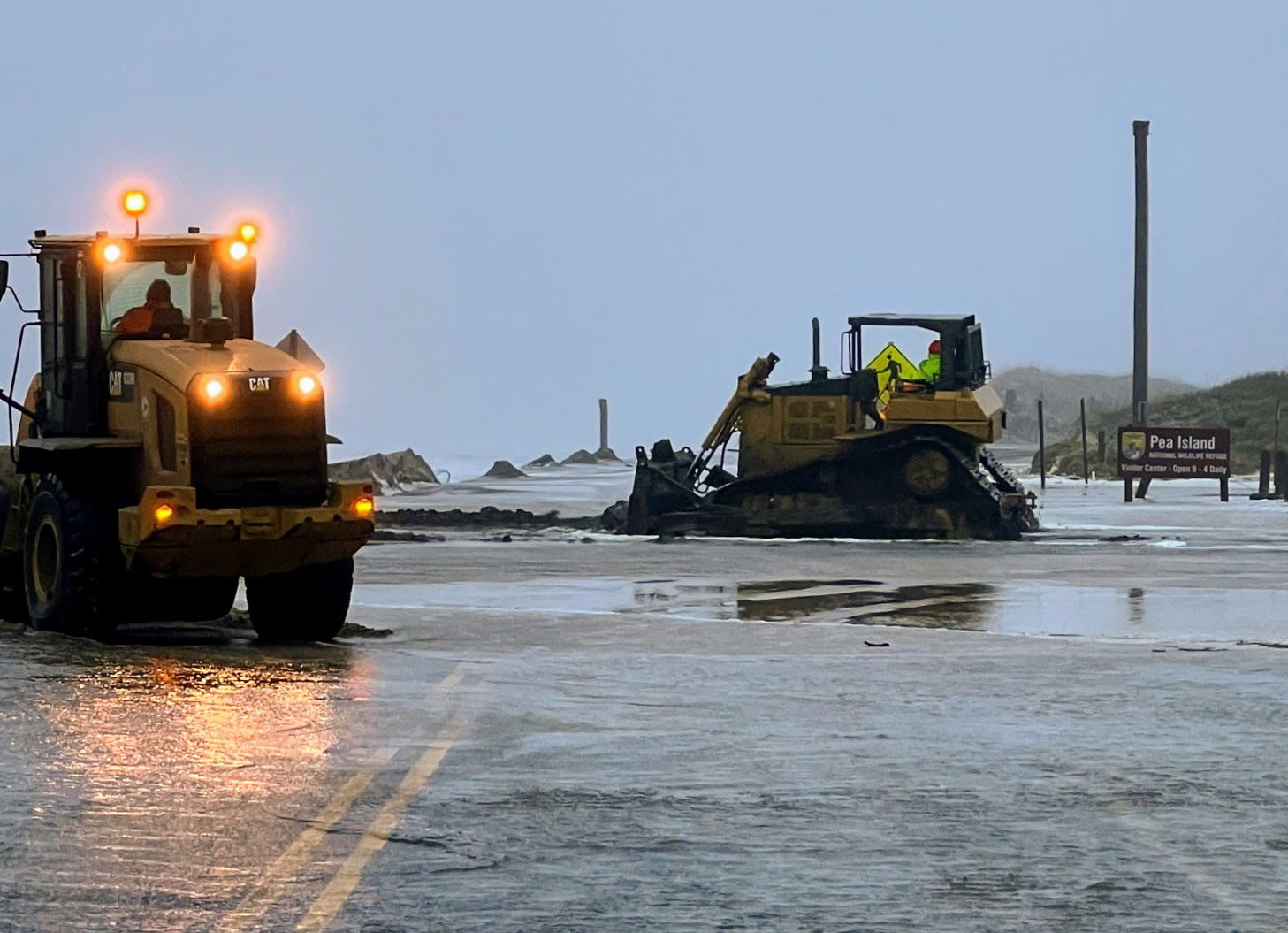
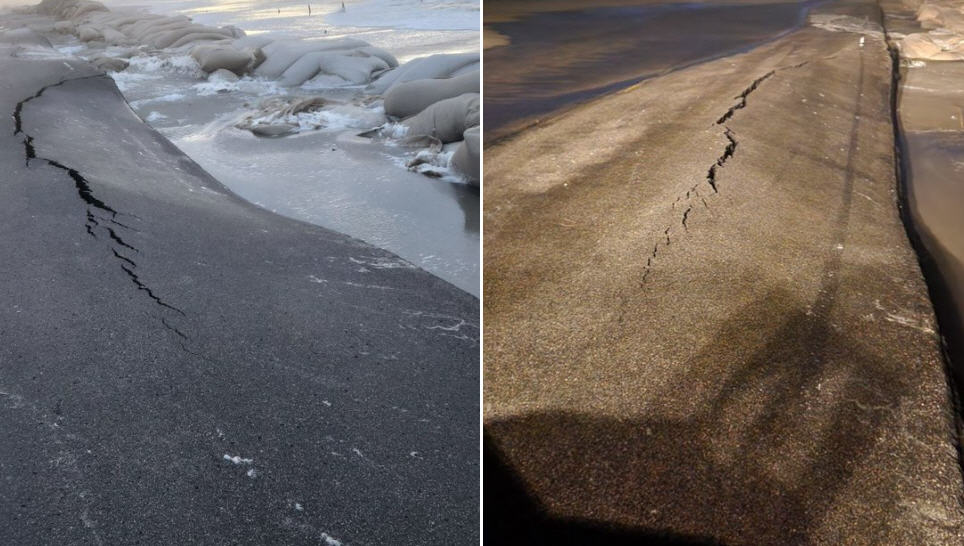
Hurricane Irene will be remembered for the two distinct inlets, multiple dune breaches, unprecedented soundside flooding, tenuous electricity, and evacuees who couldn’t return home.
Unlike the damage brought on by Hurricane Isabel in 2003, which leveled the east end of Hatteras village, Hurricane Irene’s destruction is mostly hidden by trees and behind the walls of ruined buildings that are still standing.
The tears of despair that flowed last Sunday after the storm from the residents of the flooded villages of Avon, Rodanthe, Waves, and Salvo have been completely transformed into a can-do attitude. We will rebuild and we can recover.
The centers of this positive energy are the Avon Volunteer Fire Department and the Rodanthe-Waves-Salvo Community Center, located in Rodanthe. These are the places where hundreds of people get fed three meals a day and find out information.
Even though there is some food, water, and services available at the food bank, rescue squads, and volunteer fire departments in the northern villages of Hatteras Island, it is the RWS Community Center that epitomizes the spirit of these hardy villagers.
The atmosphere is electric inside the walls of this humble building, which is supported by pilings tall enough to help it escape the damaging soundside waters of Saturday night.
This facility is providing three meals a day to the victims, the volunteers, and all the support teams sent here to help.
Once the word got out, which took a couple of days, the community center went from feeding a few dozen folks at mealtime to feeding 700 to 800 lunches and dinners. They are still asking for volunteers to help serve the food.
The Salvation Army is coordinating the meals, and the need for food has been growing. At the beginning, they just opened more cans of food, like ravioli, to help augment the amount of food and to make sure everyone got fed.
Over the last several days, the food has been coming up from local restaurants in the southern villages and by people off-island making tremendous and timely donations of food.
Island restaurants have prepared everything from trays of sandwiches to dozens of pizzas and delivered them at mealtime.
According to Ruth Morgan, a volunteer from Buxton who has immersed herself in the RWS Community Center, the food will run low and, miraculously, food arrives from an individual or restaurant.
People off-island have been making food donations by calling one of the open local restaurants, which are basically in Buxton, and requesting a certain dollar amount of food be delivered to a community center. Most donations have been between $200 and $500. The restaurant then makes the food appropriate to the canteen styles of eating and takes it there.
The Community is trying to provide for every need the people in the community might have.
The Dare County Health Department is set up, giving people tetanus shots to protect those involved in the clean-up effort.
FEMA is on hand to help victims begin the application process for emergency food stamps and aid for rebuilding their damaged homes.
This is the place to get food for your pets, small and large. Cat and dog food is readily available for the taking and upon request, hay is available for horses and livestock.
Baby diapers, tooth paste, deodorant, soaps, and shampoos are here for people to take. In fact, the building even offers showers to those who want them.
On Friday, one of the two temporary megawatt diesel generators delivered to the island following the hurricane, stopped working and lunch was served without electricity.
Ruth Morgan just kept working with no outward appearance that anything was different. “The power comes and the power goes,” Ruth says with a shrug.
In the building’s foyer are piles of canned and dry goods. Just take what you need. There are also boxes of new clothes.
At the top of her lungs, Dare County social worker Amberly Dyer yelled out the pertinent updates about available services including the Parks and Recreations Department van service to help move people around the villages. She was also taking requests for children’s clothing, which was being made available by Tommy Hilfiger.
The alcohol smell of Purell hand sanitizer permeated the air. The standing water around the villages is smelly and contaminated.
The parking lot is always full and bustling, and it isn’t always easy to find a place to park.
Verizon brought in a satellite trailer Thursday, which was a little piece of technological magic for many who stayed for the storm. The big screen TV ran inside the van, and outside were phones so people could make contact with friends and relatives off the island. It was a joyous moment for dozens of stranded islanders, both off and on the island.
Verizon has four of these portable units, and this one came all the way from Dallas, Texas. These trucks offer Internet and cell phone service via satellite.
“We were surprised that we got it up so quickly,” offered Verizon employee James Fletcher. He was impressed by the island community and offered, “This is a real tight community. Everybody knows everybody.”
This is a proud group of people who are angry at the opinion that the outside world carries about their choice to stay during the storm. These are hardy people with the knowledge of storms bred in them through the generations. They don’t call 911 for help when they get scared. They adjust to the changing conditions and protect themselves first, property second.
The power of the people in the tri-villages is almost something you can reach out and touch. They are ready to get over the storm and to move forward. The people haven’t given up or lost hope.
“We will clean it up. We will live here. We will not be told by environmentalists that we can’t be here,” Ruth Morgan says with conviction.
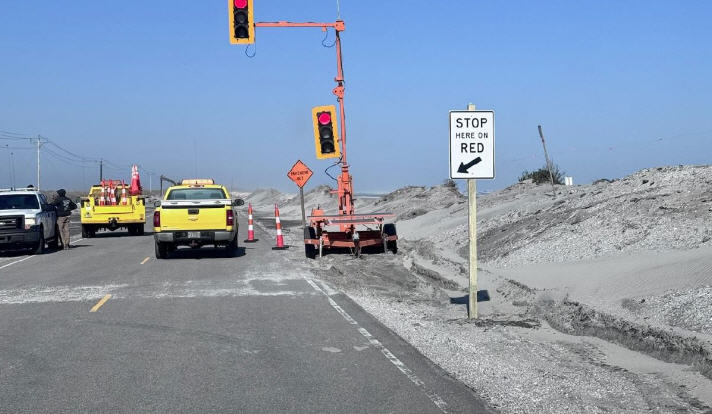
Still, the community looks nervously north towards the broken highway that separates Hatteras Island from the rest of the world. There is a palatable nervousness for fear that environmental groups will stop the plugging of the inlets. Opening up the highway is important to the fragile recovery now tethering the island economy and the hope that the remainder of the 2011 tourist season can be salvaged. The fear of Hurricane Katia grows a little everyday.
In spite of it all, there is gratitude flowing from the hearts and souls of the island’s residents Hurricane Irene wasn’t the direct hit as forecasted. After all, it could have been worse, a lot worse.
Every big storm, whether it is a northeaster, tropical storm, or a full-blown Hurricane, has its own signature.
Hurricane Irene will be remembered for the two distinct inlets, multiple dune breaches, unprecedented soundside flooding, tenuous electricity, and evacuees who couldn’t return home.
Unlike the damage brought on by Hurricane Isabel in 2003, which leveled the east end of Hatteras village, Hurricane Irene’s destruction is mostly hidden by trees and behind the walls of ruined buildings that are still standing.
The tears of despair that flowed last Sunday after the storm from the residents of the flooded villages of Avon, Rodanthe, Waves, and Salvo have been completely transformed into a can-do attitude. We will rebuild and we can recover.
The centers of this positive energy are the Avon Volunteer Fire Department and the Rodanthe-Waves-Salvo Community Center, located in Rodanthe. These are the places where hundreds of people get fed three meals a day and find out information.
Even though there is some food, water, and services available at the food bank, rescue squads, and volunteer fire departments in the northern villages of Hatteras Island, it is the RWS Community Center that epitomizes the spirit of these hardy villagers.
The atmosphere is electric inside the walls of this humble building, which is supported by pilings tall enough to help it escape the damaging soundside waters of Saturday night.
This facility is providing three meals a day to the victims, the volunteers, and all the support teams sent here to help.
Once the word got out, which took a couple of days, the community center went from feeding a few dozen folks at mealtime to feeding 700 to 800 lunches and dinners. They are still asking for volunteers to help serve the food.
The Salvation Army is coordinating the meals, and the need for food has been growing. At the beginning, they just opened more cans of food, like ravioli, to help augment the amount of food and to make sure everyone got fed.
Over the last several days, the food has been coming up from local restaurants in the southern villages and by people off-island making tremendous and timely donations of food.
Island restaurants have prepared everything from trays of sandwiches to dozens of pizzas and delivered them at mealtime.
According to Ruth Morgan, a volunteer from Buxton who has immersed herself in the RWS Community Center, the food will run low and, miraculously, food arrives from an individual or restaurant.
People off-island have been making food donations by calling one of the open local restaurants, which are basically in Buxton, and requesting a certain dollar amount of food be delivered to a community center. Most donations have been between $200 and $500. The restaurant then makes the food appropriate to the canteen styles of eating and takes it there.
The Community is trying to provide for every need the people in the community might have.
The Dare County Health Department is set up, giving people tetanus shots to protect those involved in the clean-up effort.
FEMA is on hand to help victims begin the application process for emergency food stamps and aid for rebuilding their damaged homes.
This is the place to get food for your pets, small and large. Cat and dog food is readily available for the taking and upon request, hay is available for horses and livestock.
Baby diapers, tooth paste, deodorant, soaps, and shampoos are here for people to take. In fact, the building even offers showers to those who want them.
On Friday, one of the two temporary megawatt diesel generators delivered to the island following the hurricane, stopped working and lunch was served without electricity.
Ruth Morgan just kept working with no outward appearance that anything was different. “The power comes and the power goes,” Ruth says with a shrug.
In the building’s foyer are piles of canned and dry goods. Just take what you need. There are also boxes of new clothes.
At the top of her lungs, Dare County social worker Amberly Dyer yelled out the pertinent updates about available services including the Parks and Recreations Department van service to help move people around the villages. She was also taking requests for children’s clothing, which was being made available by Tommy Hilfiger.
The alcohol smell of Purell hand sanitizer permeated the air. The standing water around the villages is smelly and contaminated.
The parking lot is always full and bustling, and it isn’t always easy to find a place to park.
Verizon brought in a satellite trailer Thursday, which was a little piece of technological magic for many who stayed for the storm. The big screen TV ran inside the van, and outside were phones so people could make contact with friends and relatives off the island. It was a joyous moment for dozens of stranded islanders, both off and on the island.
Verizon has four of these portable units, and this one came all the way from Dallas, Texas. These trucks offer Internet and cell phone service via satellite.
“We were surprised that we got it up so quickly,” offered Verizon employee James Fletcher. He was impressed by the island community and offered, “This is a real tight community. Everybody knows everybody.”
This is a proud group of people who are angry at the opinion that the outside world carries about their choice to stay during the storm. These are hardy people with the knowledge of storms bred in them through the generations. They don’t call 911 for help when they get scared. They adjust to the changing conditions and protect themselves first, property second.
The power of the people in the tri-villages is almost something you can reach out and touch. They are ready to get over the storm and to move forward. The people haven’t given up or lost hope.
“We will clean it up. We will live here. We will not be told by environmentalists that we can’t be here,” Ruth Morgan says with conviction.
Still, the community looks nervously north towards the broken highway that separates Hatteras Island from the rest of the world. There is a palatable nervousness for fear that environmental groups will stop the plugging of the inlets. Opening up the highway is important to the fragile recovery now tethering the island economy and the hope that the remainder of the 2011 tourist season can be salvaged. The fear of Hurricane Katia grows a little everyday.
In spite of it all, there is gratitude flowing from the hearts and souls of the island’s residents Hurricane Irene wasn’t the direct hit as forecasted. After all, it could have been worse, a lot worse.
Every big storm, whether it is a northeaster, tropical storm, or a full-blown Hurricane, has its own signature.
Hurricane Irene will be remembered for the two distinct inlets, multiple dune breaches, unprecedented soundside flooding, tenuous electricity, and evacuees who couldn’t return home.
Unlike the damage brought on by Hurricane Isabel in 2003, which leveled the east end of Hatteras village, Hurricane Irene’s destruction is mostly hidden by trees and behind the walls of ruined buildings that are still standing.
The tears of despair that flowed last Sunday after the storm from the residents of the flooded villages of Avon, Rodanthe, Waves, and Salvo have been completely transformed into a can-do attitude. We will rebuild and we can recover.
The centers of this positive energy are the Avon Volunteer Fire Department and the Rodanthe-Waves-Salvo Community Center, located in Rodanthe. These are the places where hundreds of people get fed three meals a day and find out information.
Even though there is some food, water, and services available at the food bank, rescue squads, and volunteer fire departments in the northern villages of Hatteras Island, it is the RWS Community Center that epitomizes the spirit of these hardy villagers.
The atmosphere is electric inside the walls of this humble building, which is supported by pilings tall enough to help it escape the damaging soundside waters of Saturday night.
This facility is providing three meals a day to the victims, the volunteers, and all the support teams sent here to help.
Once the word got out, which took a couple of days, the community center went from feeding a few dozen folks at mealtime to feeding 700 to 800 lunches and dinners. They are still asking for volunteers to help serve the food.
The Salvation Army is coordinating the meals, and the need for food has been growing. At the beginning, they just opened more cans of food, like ravioli, to help augment the amount of food and to make sure everyone got fed.
Over the last several days, the food has been coming up from local restaurants in the southern villages and by people off-island making tremendous and timely donations of food.
Island restaurants have prepared everything from trays of sandwiches to dozens of pizzas and delivered them at mealtime.
According to Ruth Morgan, a volunteer from Buxton who has immersed herself in the RWS Community Center, the food will run low and, miraculously, food arrives from an individual or restaurant.
People off-island have been making food donations by calling one of the open local restaurants, which are basically in Buxton, and requesting a certain dollar amount of food be delivered to a community center. Most donations have been between $200 and $500. The restaurant then makes the food appropriate to the canteen styles of eating and takes it there.
The Community is trying to provide for every need the people in the community might have.
The Dare County Health Department is set up, giving people tetanus shots to protect those involved in the clean-up effort.
FEMA is on hand to help victims begin the application process for emergency food stamps and aid for rebuilding their damaged homes.
This is the place to get food for your pets, small and large. Cat and dog food is readily available for the taking and upon request, hay is available for horses and livestock.
Baby diapers, tooth paste, deodorant, soaps, and shampoos are here for people to take. In fact, the building even offers showers to those who want them.
On Friday, one of the two temporary megawatt diesel generators delivered to the island following the hurricane, stopped working and lunch was served without electricity.
Ruth Morgan just kept working with no outward appearance that anything was different. “The power comes and the power goes,” Ruth says with a shrug.
In the building’s foyer are piles of canned and dry goods. Just take what you need. There are also boxes of new clothes.
At the top of her lungs, Dare County social worker Amberly Dyer yelled out the pertinent updates about available services including the Parks and Recreations Department van service to help move people around the villages. She was also taking requests for children’s clothing, which was being made available by Tommy Hilfiger.
The alcohol smell of Purell hand sanitizer permeated the air. The standing water around the villages is smelly and contaminated.
The parking lot is always full and bustling, and it isn’t always easy to find a place to park.
Verizon brought in a satellite trailer Thursday, which was a little piece of technological magic for many who stayed for the storm. The big screen TV ran inside the van, and outside were phones so people could make contact with friends and relatives off the island. It was a joyous moment for dozens of stranded islanders, both off and on the island.
Verizon has four of these portable units, and this one came all the way from Dallas, Texas. These trucks offer Internet and cell phone service via satellite.
“We were surprised that we got it up so quickly,” offered Verizon employee James Fletcher. He was impressed by the island community and offered, “This is a real tight community. Everybody knows everybody.”
This is a proud group of people who are angry at the opinion that the outside world carries about their choice to stay during the storm. These are hardy people with the knowledge of storms bred in them through the generations. They don’t call 911 for help when they get scared. They adjust to the changing conditions and protect themselves first, property second.
The power of the people in the tri-villages is almost something you can reach out and touch. They are ready to get over the storm and to move forward. The people haven’t given up or lost hope.
“We will clean it up. We will live here. We will not be told by environmentalists that we can’t be here,” Ruth Morgan says with conviction.
Still, the community looks nervously north towards the broken highway that separates Hatteras Island from the rest of the world. There is a palatable nervousness for fear that environmental groups will stop the plugging of the inlets. Opening up the highway is important to the fragile recovery now tethering the island economy and the hope that the remainder of the 2011 tourist season can be salvaged. The fear of Hurricane Katia grows a little everyday.
In spite of it all, there is gratitude flowing from the hearts and souls of the island’s residents Hurricane Irene wasn’t the direct hit as forecasted. After all, it could have been worse, a lot worse.
Every big storm, whether it is a northeaster, tropical storm, or a full-blown Hurricane, has its own signature.
Hurricane Irene will be remembered for the two distinct inlets, multiple dune breaches, unprecedented soundside flooding, tenuous electricity, and evacuees who couldn’t return home.
Unlike the damage brought on by Hurricane Isabel in 2003, which leveled the east end of Hatteras village, Hurricane Irene’s destruction is mostly hidden by trees and behind the walls of ruined buildings that are still standing.
The tears of despair that flowed last Sunday after the storm from the residents of the flooded villages of Avon, Rodanthe, Waves, and Salvo have been completely transformed into a can-do attitude. We will rebuild and we can recover.
The centers of this positive energy are the Avon Volunteer Fire Department and the Rodanthe-Waves-Salvo Community Center, located in Rodanthe. These are the places where hundreds of people get fed three meals a day and find out information.
Even though there is some food, water, and services available at the food bank, rescue squads, and volunteer fire departments in the northern villages of Hatteras Island, it is the RWS Community Center that epitomizes the spirit of these hardy villagers.
The atmosphere is electric inside the walls of this humble building, which is supported by pilings tall enough to help it escape the damaging soundside waters of Saturday night.
This facility is providing three meals a day to the victims, the volunteers, and all the support teams sent here to help.
Once the word got out, which took a couple of days, the community center went from feeding a few dozen folks at mealtime to feeding 700 to 800 lunches and dinners. They are still asking for volunteers to help serve the food.
The Salvation Army is coordinating the meals, and the need for food has been growing. At the beginning, they just opened more cans of food, like ravioli, to help augment the amount of food and to make sure everyone got fed.
Over the last several days, the food has been coming up from local restaurants in the southern villages and by people off-island making tremendous and timely donations of food.
Island restaurants have prepared everything from trays of sandwiches to dozens of pizzas and delivered them at mealtime.
According to Ruth Morgan, a volunteer from Buxton who has immersed herself in the RWS Community Center, the food will run low and, miraculously, food arrives from an individual or restaurant.
People off-island have been making food donations by calling one of the open local restaurants, which are basically in Buxton, and requesting a certain dollar amount of food be delivered to a community center. Most donations have been between $200 and $500. The restaurant then makes the food appropriate to the canteen styles of eating and takes it there.
The Community is trying to provide for every need the people in the community might have.
The Dare County Health Department is set up, giving people tetanus shots to protect those involved in the clean-up effort.
FEMA is on hand to help victims begin the application process for emergency food stamps and aid for rebuilding their damaged homes.
This is the place to get food for your pets, small and large. Cat and dog food is readily available for the taking and upon request, hay is available for horses and livestock.
Baby diapers, tooth paste, deodorant, soaps, and shampoos are here for people to take. In fact, the building even offers showers to those who want them.
On Friday, one of the two temporary megawatt diesel generators delivered to the island following the hurricane, stopped working and lunch was served without electricity.
Ruth Morgan just kept working with no outward appearance that anything was different. “The power comes and the power goes,” Ruth says with a shrug.
In the building’s foyer are piles of canned and dry goods. Just take what you need. There are also boxes of new clothes.
At the top of her lungs, Dare County social worker Amberly Dyer yelled out the pertinent updates about available services including the Parks and Recreations Department van service to help move people around the villages. She was also taking requests for children’s clothing, which was being made available by Tommy Hilfiger.
The alcohol smell of Purell hand sanitizer permeated the air. The standing water around the villages is smelly and contaminated.
The parking lot is always full and bustling, and it isn’t always easy to find a place to park.
Verizon brought in a satellite trailer Thursday, which was a little piece of technological magic for many who stayed for the storm. The big screen TV ran inside the van, and outside were phones so people could make contact with friends and relatives off the island. It was a joyous moment for dozens of stranded islanders, both off and on the island.
Verizon has four of these portable units, and this one came all the way from Dallas, Texas. These trucks offer Internet and cell phone service via satellite.
“We were surprised that we got it up so quickly,” offered Verizon employee James Fletcher. He was impressed by the island community and offered, “This is a real tight community. Everybody knows everybody.”
This is a proud group of people who are angry at the opinion that the outside world carries about their choice to stay during the storm. These are hardy people with the knowledge of storms bred in them through the generations. They don’t call 911 for help when they get scared. They adjust to the changing conditions and protect themselves first, property second.
The power of the people in the tri-villages is almost something you can reach out and touch. They are ready to get over the storm and to move forward. The people haven’t given up or lost hope.
“We will clean it up. We will live here. We will not be told by environmentalists that we can’t be here,” Ruth Morgan says with conviction.
Still, the community looks nervously north towards the broken highway that separates Hatteras Island from the rest of the world. There is a palatable nervousness for fear that environmental groups will stop the plugging of the inlets. Opening up the highway is important to the fragile recovery now tethering the island economy and the hope that the remainder of the 2011 tourist season can be salvaged. The fear of Hurricane Katia grows a little everyday.
In spite of it all, there is gratitude flowing from the hearts and souls of the island’s residents Hurricane Irene wasn’t the direct hit as forecasted. After all, it could have been worse, a lot worse.
CLICK HERE TO VIEW SLIDE SHOW
CLICK HERE TO VIEW SLIDE SHOW
CLICK HERE TO VIEW SLIDE SHOW
CLICK HERE TO VIEW SLIDE SHOW
Subject
Name
(required, will not be published)
(required, will not be published)
City :
State :
Your Comments:
May be posted on the Letters to the Editor page at the discretion of the editor.
May be posted on the Letters to the Editor page at the discretion of the editor.
May be posted on the Letters to the Editor page at the discretion of the editor.
May be posted on the Letters to the Editor page at the discretion of the editor.