
Charging a toll for Hatteras-Ocracoke ferry under discussion in Raleigh
Charging a toll for Hatteras-Ocracoke ferry under discussion in Raleigh
By CONNIE LEINBACH
By CONNIE LEINBACH
By CONNIE LEINBACH
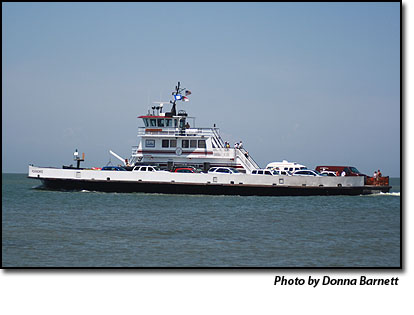
Charging a toll for the Hatteras-Ocracoke ferry and raising rates for the sound ferries may be a reality before June if the North Carolina General Assembly demands it.
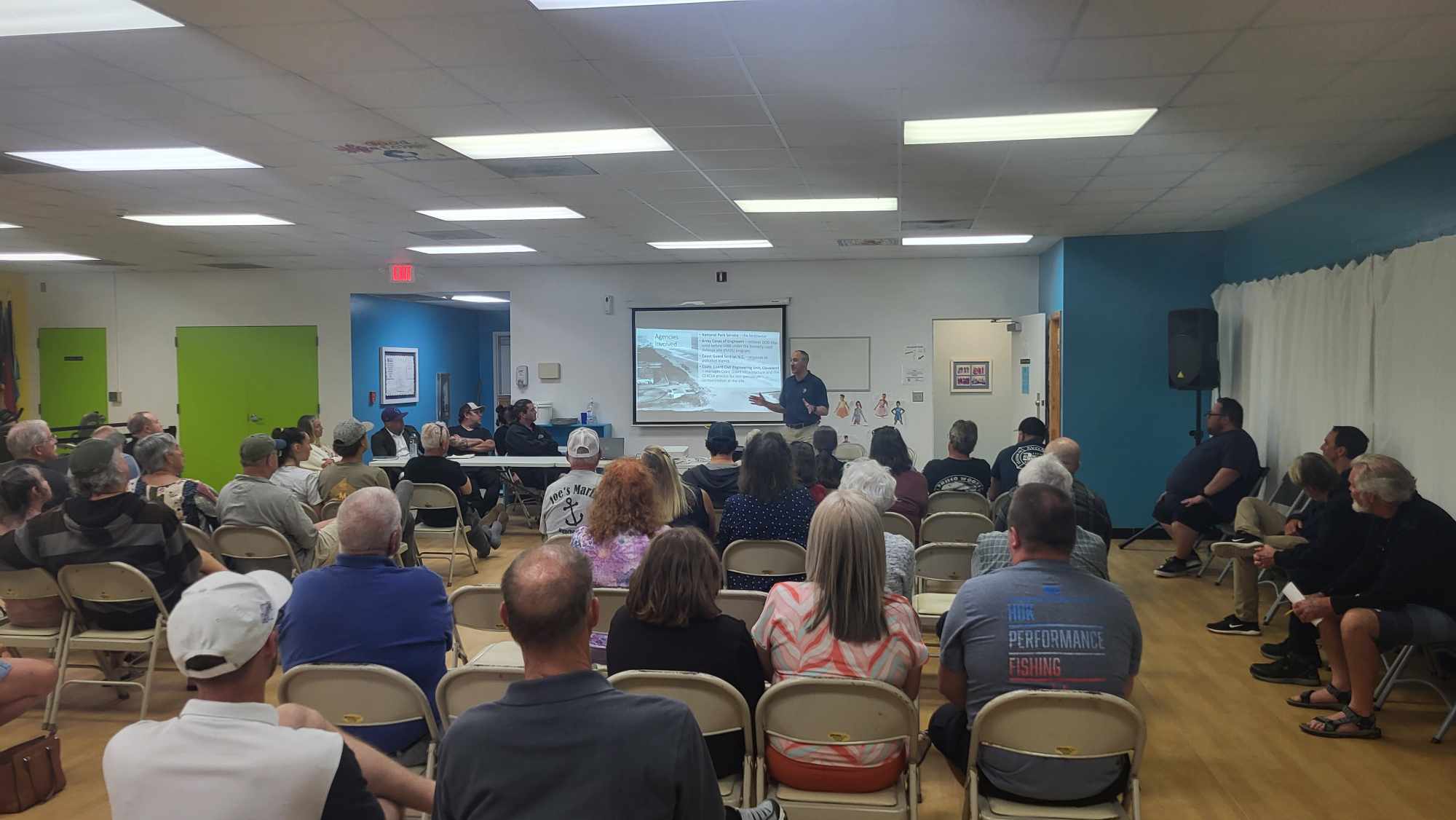
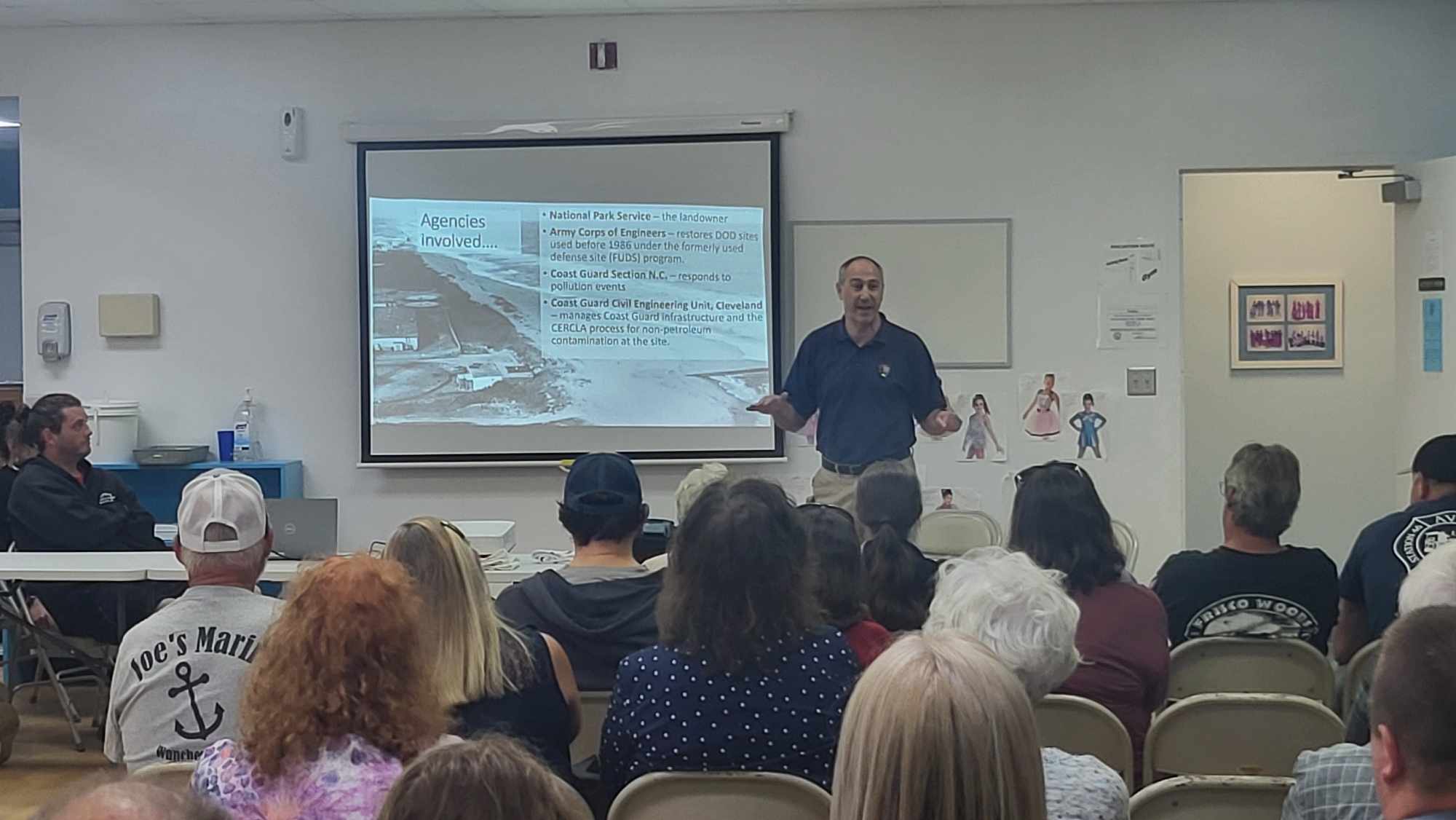
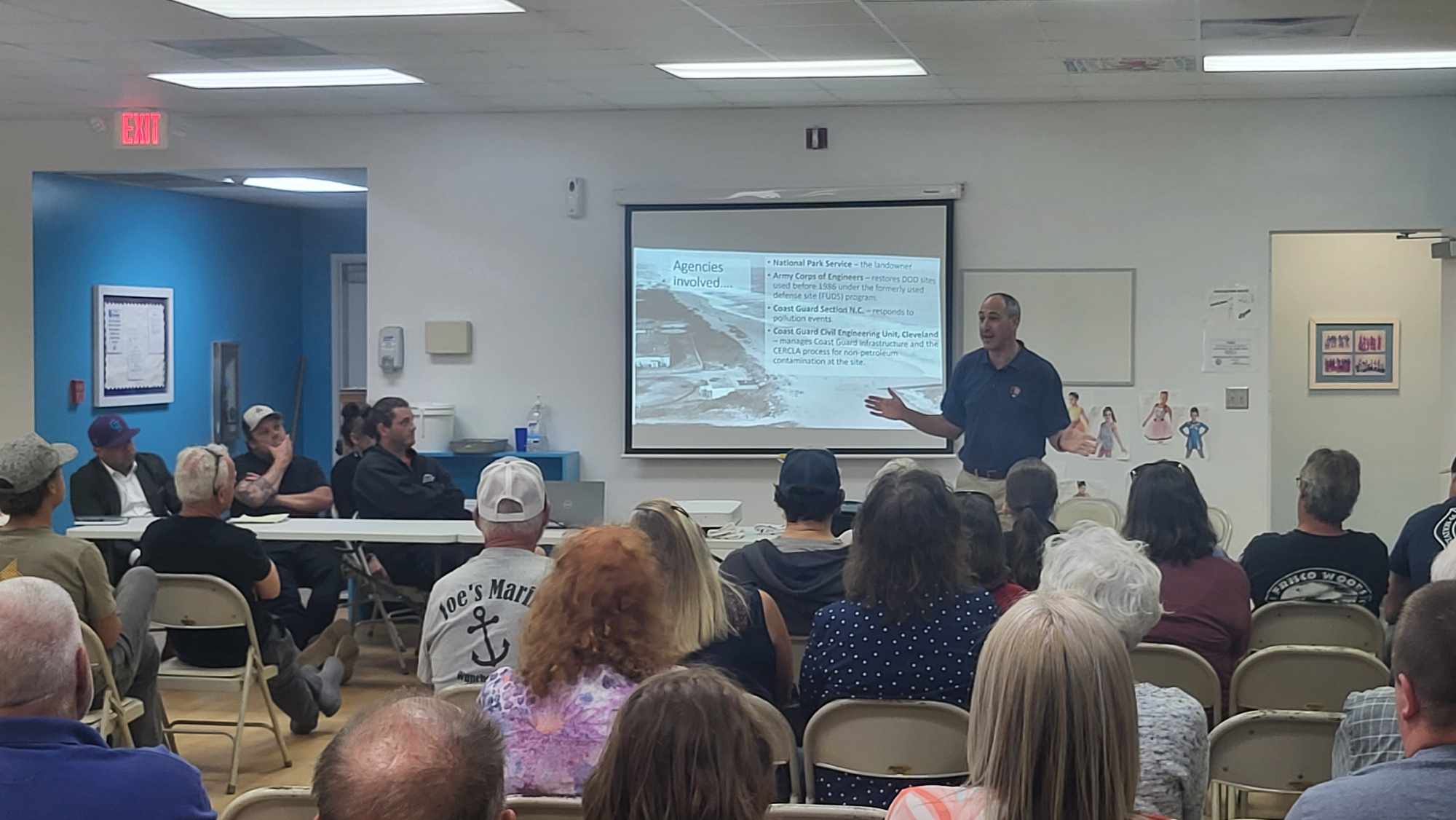
Hyde County Manager Mazie Smith reported on this possibility Wednesday night at the Ocracoke Civic and Business Association meeting in the Ocracoke Community Center.
She had attended a state Department of Transportation presentation by Deputy Secretary for Transit Jim Westmoreland to the legislature’s Joint Transportation Appropriations Subcommittee Tuesday in Raleigh.
Westmoreland’s scenarios suggested a $10 toll each way at all the free ferries in North Carolina, an increase on the sound ferries to $30, and a monthly commuter pass of $100.
Greer Beaty, director of communications for NCDOT, stressed that Westmoreland’s presentation was simply informational.
“The General Assembly asked us to present ideas about how we could recover more income from the ferry system,” she said. “We have no mandate now to raise tolls. There is no proposal on the table.”
She explained that the NCDOT is in the process of conducting a ferry study that will be completed by May 1. After that, refinements are made with the information and it goes through the committee process to be placed in the overall state budget, which has to be in place July 1.
This is a bad budget year, Beaty said, and the General Assembly is looking at all ways to raise revenues and cut costs.
Beaty confirmed that the General Assembly has the ability to ask agencies to make changes at any time.
And that’s what concerns Smith, who said she heard that the legislature wants to fast-track getting more revenues from the ferries, even as soon as by the end of March.
She urged Ocracokers to make their voices heard now by sending letters and emails to their legislators and, preferably, making a trip to Raleigh.
“I’m afraid that if we don’t make some noise about it, it’s going to happen,” she said about the possibility of a toll. “The legislature wants to recover 25 percent of the ferry division operating costs.”
At present, total annual operations costs are $40.8 million. Current revenues from ferry riders total $2.2 million. Westmoreland’s proposed tolls estimated revenues could be $10.4 million.
In addition to adding and raising tolls, Westmoreland’s presentation looked at reducing the number of ferry runs through a return to the 2009 schedule, which would likely result in laying off personnel, closing the Morehead City office, and consolidating the reservation system with the Turnpike office.
The more than 20 Ocracokers who attended Wednesday night’s meeting were uniformly aghast at the prospect of the Hatteras Inlet ferry charging a toll.
Such fees would reduce ridership, they said, resulting in even lower revenues.
That, in turn, would result in fewer dollars spent on Ocracoke, which would result in less sales tax collected for the state and the county.
“This would be devastating,” said Darlene Styron, the Hyde County commissioner representing Ocracoke, especially since Ocracoke has no alternative free route.
“We already pay a lot to live here, and Ocracoke pays a lot of taxes to the state and Hyde County. I shouldn’t have to pay $10 to leave the island to go to the dentist.
“When you start with even a small toll, there’s nowhere to go but up,” Styron continued. “This is going to hurt businesses and the local people.”
With gasoline prices expected to reach $4 per gallon this summer, another fee would further tighten the economic screws to the already fee-weary islanders.
There are the trash fees, saltwater fishing license fees and a proposed fee to drive on the beaches of the Cape Hatteras National Seashore, not to mention more beach closures by the National Park Service. Islanders note that beach closures last summer kept some tourists away.
Rufus Keel, owner of the Sunglass Shop on Ocracoke, echoed the sentiments of many business owners.
“If they do this, they might as well close the ferries and save even more money because no one will come,” he said, adding that he would have to close his shop since his customers are mostly all day-trippers.
After some discussion about whether islanders could live with a small toll to Hatteras and a small increase on the Cedar Island and Swan Quarter ferries, OCBA treasurer Frank Brown, said “We need to be against all tolls on the Hatteras ferry.”
The OCBA agreed to have a community meeting Wednesday, March 16, tentatively in the Community Center, to organize action against this.
Smith said she will call county managers of other counties that have ferries to rally them to pass ordinances opposing these tolls.
Another impending wrinkle with the Hatteras ferry is that the Coast Guard will now begin to enforce weight limits on the ferries. If the weight limit is reached before the ferry is filled, personnel will stop loading and run with empty spaces.
One tool islanders may be able to wield is whether it is unconstitutional to charge a toll on the only free access route to Ocracoke. The ferry lane between Hatteras and Ocracoke is a federal highway.
The Ferry Division operates seven routes in eight counties, including the Southport-Fort Fisher route in Brunswick and New Hanover counties. About 1 million vehicles and 2 million passengers ride the state’s ferries annually.
Today, tolls are charged on only three routes – the short run across the Cape Fear River and the two long-distance routes across Pamlico Sound linking Ocracoke to the mainland.
The Minnesott Beach-Cherry Branch, Bayview-Aurora, Currituck-Knotts Island and Hatteras-Ocracoke routes are free.
According to Westmoreland’s presentation, Ocracoke-Hatteras has the highest yearly ridership, having transported 875,257 in 2009-2010, compared to the Cherry Branch-Minnesott ferry’s totals of 403,984.
Subject
Name
(required, will not be published)
(required, will not be published)
City :
State :
Your Comments:
May be posted on the Letters to the Editor page at the discretion of the editor.
May be posted on the Letters to the Editor page at the discretion of the editor.
May be posted on the Letters to the Editor page at the discretion of the editor.
May be posted on the Letters to the Editor page at the discretion of the editor.