
Speakers urge action on bridge, but another environmental study may be necessary
By IRENE NOLAN
Monday is the last day for the public to comment on the Environmental Assessment of the Bonner Bridge replacement project that was released in May.
The North Carolina Department of Transportation conducted public comment meetings in Dare County in early July and will close the comment period on Aug. 9.
Details on how to submit comment can be found at the end of the article, along with links to other articles and comments made by federal, state, and local governments and environmental groups.
The Bridge Moms group will continue to accept letters for a while.
North Carolina Gov. Beverly Perdue has agreed to deliver letters urging that the Bonner Bridge replacement plan go forward now to protect children to First Lady Michelle Obama next week, according to Beth Midgett, head Bridge Mom and chairman of the Dare County Citizens’ Action Committee to Replace the Bonner Bridge.
Midgett sent out an urgent plea last evening for more letters to be written overnight and delivered this morning to overnight them to the governor’s office.
Midgett said today that 106 letters were sent out this morning.
The group will continue to collect the letters and Midgett hopes that another mom, U.S. Sen. Kay Hagan, D-N.C., will deliver the rest to the First Lady.
“You do not have to live on Hatteras or Ocracoke island to participate,” Midgett says. “Any concerned mom, of any age, who has a child or grandchild who travels over the bridge at any time is welcome. For example: Perhaps there are older mothers off the Island whose adult children live on one of the islands? Or grandmothers from off the island whose grandchildren are dependent on the lifeline of Bonner Bridge? Maybe a mother from off island who has a son who drives a delivery truck on and off the island? A Mom from off island whose son visits in the fall to come fishing…. All are welcome to write an appeal.”
Sending photos of children who live on or visit the island is also encouraged.
Also this week, state Rep. Tim Spear of Creswell, who represents Dare County in the General Assembly submitted his comments, along with Outer Banks Chamber of Commerce.
You can click on the link at the end of this article to read these comments and Dare County’s comments, which were submitted earlier.
All three of these letters are very thorough and well done and stress the public safety and economic impacts of waiting any longer to replace the aging Bonner Bridge.
After all comments have been received, NCDOT and the Federal Highway Administration will compile them and decide whether to issue a Record of Decision based on the Environmental Assessment or whether another environmental study is needed.
Tim Spear summed up the feelings of many islanders and visitors.
“We have been fortunate,” he said, “that no real catastrophes have occurred to date, but the poor condition of the Bonner Bridge puts everyone at risk. The current bridge sees a traffic flow of over 5,000 vehicles per day and during the summer months that can grow to around 10,000. It is past time to build this bridge – we cannot wait any longer. We do not need anymore studies and the Record of Decision (ROD) should be released as soon as the public comment period has expired.”
THE ENVIRONMENTAL ASSESSMENTS AND COMMENTS
Click here to read state Rep. Tim Spear’s comments
Click here to read the Outer Banks Chamber of Commerce comments
Click here to read Dare County’s comments
Click here to read comments from North Carolina State Agencies
HOW TO SUBMIT COMMENTS
If you missed the public hearings, you can still submit comments until Aug. 9.
Citizens who did not speak at the meetings but would like to provide comments can mail them to Drew Joyner, Human Environment Unit Head, NCDOT, 1598 Mail Service Center, Raleigh, NC 27699-1598. They may also call or e-mail their comments to Drew Joyner at (919) 431-6700 or djoyner@ncdot.gov.
NCDOT, the Federal Highway Administration, and other agencies will review the comments received and then determine if additional environmental studies are needed.
To read the Environmental Assessment and view the project maps, visit the NCDOT Web site or the Outer Banks Task Force Web site. Copies of the Environmental Assessment are also available at the following locations:
• Dare County Planning and Inspections Satellite Office 49815 Highway 12 in Frisco.
• NCDOT Resident Engineer’s Office 349 Waterplant Road, Unit B Manteo
• Dare County Public Library 700 U.S. 64/264 Manteo
• Dare County Public Library 56658 Highway 12 Hatteras
• Dare County Public Library 400 Mustian St. Kill Devil Hills
• Fessenden Recreation Center 46830 Highway 12 Buxton
Copies of the maps are available at the Dare County Planning and Inspections Satellite Office in Frisco and the NCDOT Resident Engineer’s Office in Manteo.
FOR MORE INFORMATION
The Editor’s Blog: An update on replacing the Bonner Bridge
http://islandfreepress.org/PivotBlog/pivot/entry.php?id=105#body
Editor’s Blog: Soccer Moms, Hockey Moms, and now Bridge Moms
http://islandfreepress.org/PivotBlog/pivot/entry.php?id=104
Bridge Moms on Facebook
http://www.facebook.com/pages/Bridge-Mom
The Editor’s Blog: Replacing the Bonner Bridge may be back on track
http://islandfreepress.org/PivotBlog/pivot/entry.php?id=98#body
Editor’s Blog: Public Comments will be critical for getting bridge replacement moving again
http://islandfreepress.org/PivotBlog/pivot/entry.php?id=101#body
Dare County Citizen’s Committee to Replace the Bridge website: www.replacethebridgenow.com.
Bonner Bridge Replacement Timeline
Keeping up with the bridge replacement schedule has not been easy since DOT started planning two decades ago to replace the aging span that opened in 1963.
Meanwhile, funds have been poured into repairing the bridge, which now has a sufficiency rating of 2 out of a possible 100. DOT officials say that with the repairs, the bridge is still safe for the public.
About 10 years ago, a plan was put forward to build a 17-mile bridge parallel to the island that would bypass Pea Island and land in Rodanthe.
That bridge, preferred by many environmental organizations, was declared too costly to build, and a federal, state, and local interagency task force endorsed the shorter, parallel bridge.
Along the way to getting construction underway, there have been a long list of environmental studies
A brief chronology:
1990. State begins feasibility study for replacing Bonner Bridge.
November, 1993. Draft Environmental Impact Statement on bridge replacement is released for review. It favors a parallel bridge.
Early 1994. Public hearings on DEIS.
1996. Preliminary Final Environmental Impact Statement is issued, which was never signed because of lack of consultation with U.S. Fish and Wildlife Service.
2001. Because it had been more than seven years since the completion of the DEIS, a re-evaluation is conducted to determine if the preliminary FEIS remains a viable alternative. Decision is made to prepare a supplement to the DEIS.
2002. Work begins on Supplemental Draft Environmental Impact Statement (SDEIS).supplement to DEIS.
September, 2005. Supplemental DEIS completed and signed. It includes five alternatives, including short- and long-bridge options.
November, 2005. Public hearings are held on SDEIS.
February, 2007. Supplement to SDEIS is signed. This supplement to the supplement includes two new parallel bridge options.
March, 2007. Two public meeting are held on the supplement to the Supplemental DEIS.
September, 2008. Final Environmental Impact Statement is signed. It favors Parallel Bridge with Phased Approach /Rodanthe Bridge as the preferred alternative and addresses comments made the SDEIS and SSDEIS.
May, 2009. Parallel Bridge Corridor with Highway 12 Transportation Management Plan Alternative was added to the FEIS and selected as the preferred alternative. This is a variation on parallel bridge alternatives addressed in FEIS.
October, 2009. Revised Section 4 (f) evaluation is issued in response to comments received on the FEIS. It determines Pamlico Sound Bridge – the long bridge — is not feasible.
January, 2010. Federal Highway Administration requests an Environmental Assessment of the preferred alternative in the FEIS.
May, 2010. Environmental Assessment is released.
June, 2010. Public comment period on EA is announced with public meetings scheduled for July.
Next up. Examine public comments on new EA and determine if more environmental studies are needed. If no more studies are needed, a Record of Decision could be issued in September.
By CATHERINE KOZAK
Another study to study the study of the mega-studied proposed new bridge over Oregon Inlet could soon be necessary, to the disbelief of frustrated Outer Bankers.
Speakers at the first of the latest hearings on building the replacement for Herbert C. Bonner Bridge responded to that possibility with a resounding sentiment of “No way!”
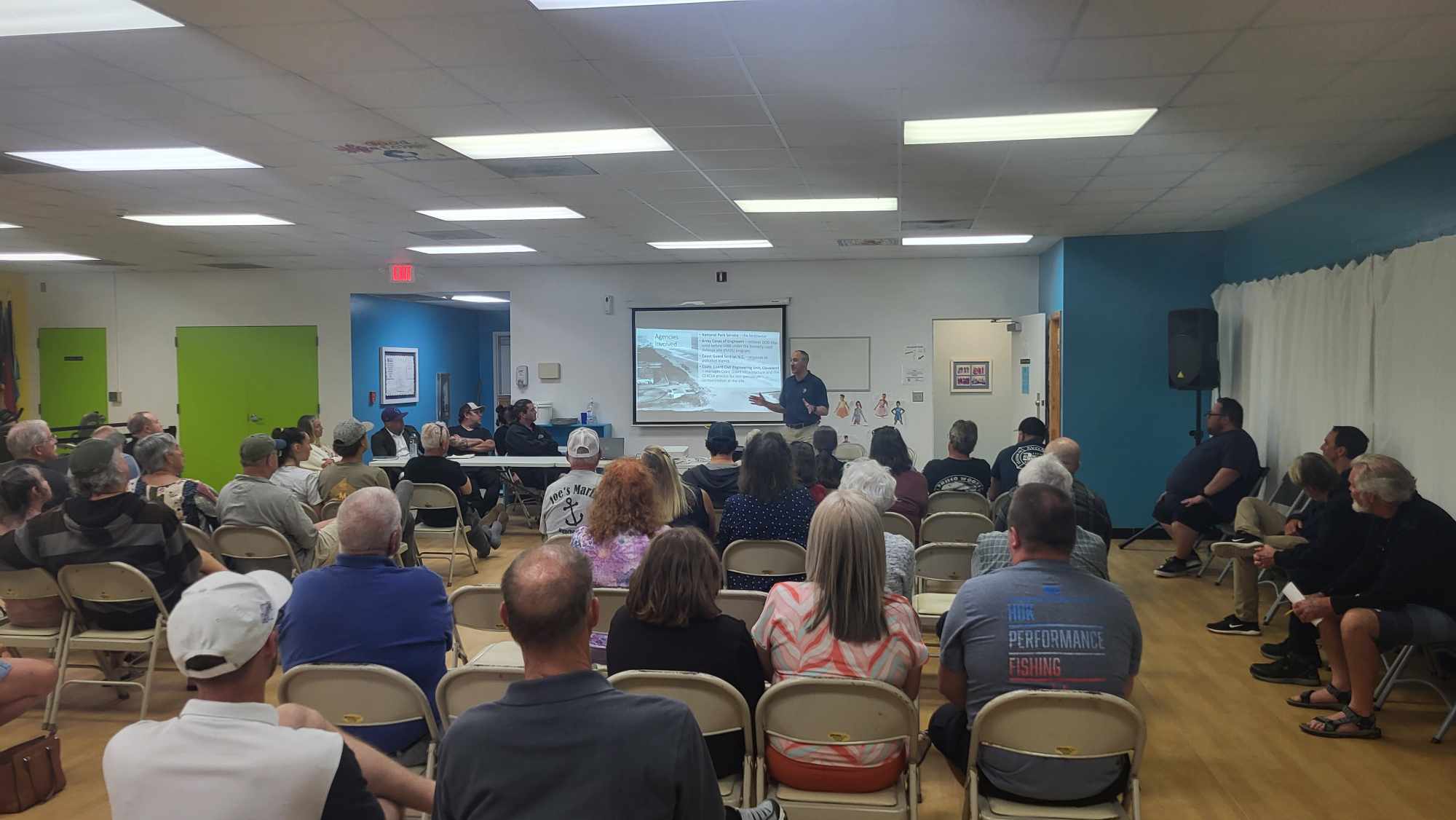
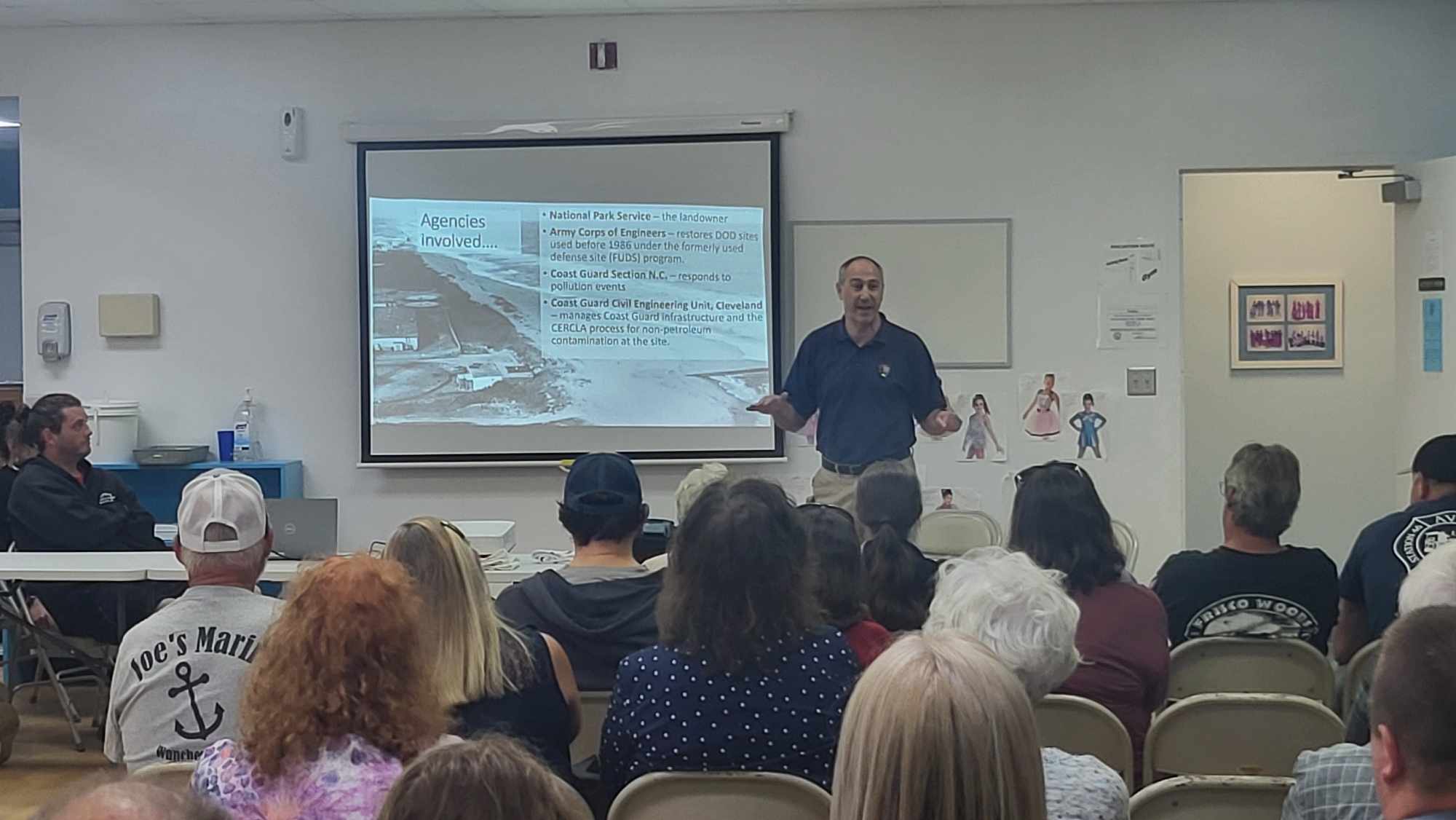
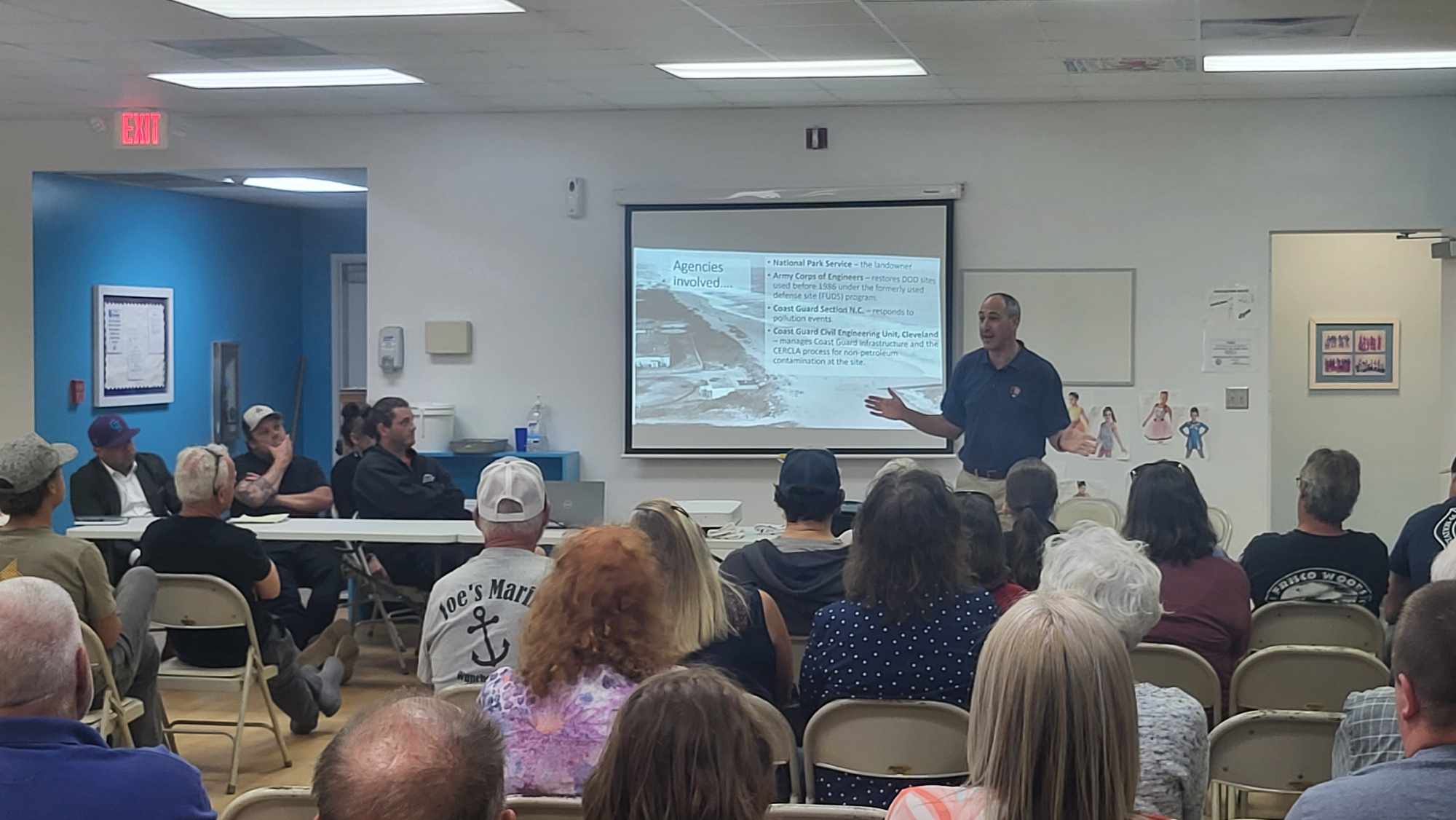
“We watched each others’ kids grow up as we’ve tried to build this bridge,” Dare County Board of Commissioners Chairman Warren Judge said at the hearing Tuesday night, July 6, in Manteo, where about a dozen people came to the microphone.
“Lord, folks, let’s get on with it. We don’t need further studies,” Judge added.
A second hearing on the most recent project plan will be held by the North Carolina Department of Transportation tonight at 7 p.m. in Buxton. The public comment period closes on Aug. 9.
Planning for the replacement of the only land link to Hatteras Island began 20 years ago, but the project has been hindered by environmental challenges, government agency disagreements, controversy about the design, and threats of lawsuits.
Until recently, most people had assumed that the planning marathon was nearing the end, and the construction start was around the corner.
But once again, the light in the tunnel has dimmed.
Transportation officials say they’re reluctant to venture guesses on a timeline until all the comments on the current Environmental Assessment are reviewed and it is determined whether there are any significant changes from the previously–approved plan. If so, that would require another supplement to the environmental plan, followed by an additional public review period before a record of decision, the final step in the process, can be issued.
“I can just tell you it could take more time, but I can’t be any more specific,” Brian Yamamoto, a DOT project development group leader, said after the hearing.
Comments submitted by some environmental groups, he said, have asserted that impacts have changed significantly and that an important environmental review in the plan is flawed.
After numerous twists and turns in the planning over the years, the DOT in 2009 finally seemed to have found a solution that could survive legal challenges and sidestep difficult permit requirements. Since then, the design has undergone revisions that address impacts to the historic district in Rodanthe. The state has also definitively dropped its once-favored 17-mile alternative that would have bypassed Pea Island National Wildlife Refuge.
The current preferred alternative would as soon as possible build the bridge just west of the existing bridge, and include a management plan to address Highway 12 improvements as needed. The new bridge, expected to cost about $300 million, would be completed before the old one is demolished, and a permit would be sought to keep the terminal groin in place. An 8-foot shoulder for bicycles and some provision for fishing have been approved, but the final designs are still to be determined. Funds — 80 percent federal, 20 percent state —- are already available for the bridge.
The long-term transportation management plan could cost as much as $1.5 billion through 2060. Options include bridges or nourishment, or combinations of them, and could require relocations of up to six homes and seven businesses.
An environmental assessment was released in May, triggering the need for this week’s hearings.
Opened in 1963, the Bonner Bridge was designed to last 30 years. Over time, Oregon Inlet’s notoriously powerful currents and frequent storms battered the span with corrosive saltwater, deteriorating the 2.5-mile concrete and steel structure. Although its condition is rated poor, the state has spent millions for repairs to keep the span safe until it is replaced.
But residents, nonetheless, are fearful about the bridge collapsing, taking lives and the islands’ tourism-based economy down with it. Several people referred to the difficulty 20 years ago when a dredge hit the span and the island was cut off for months.
Beth Midgett, chairwoman of the Citizens’ Action Committee to Replace the Bonner Bridge Now, told the 50 or so attendees — which included numerous local officials and DOT staff —- that the bridge that is “suffering a slow death” is the lifeline for the more than 5,000 year-round residents on Hatteras and Ocracoke islands.
“As a parent and as a host for vacationers and as a responsible member of the community, you have no idea how stressful it is to wonder what can happen,” Midgett said.
“Please —- you can’t do this to us again down here.”
In an e-mail message that Midgett distributed the following day, she wrote that she is concerned that the completion date could now extend past 2017, the final year that bridge repairs were designed to last. When the plan was first updated in the early 2000s, the bridge had been expected to be completed by 2010.
Dare County Sheriff Rodney Midgett said that the bridge is vital to providing services and protection. If it collapsed, he said, everything from power supplies to emergency assistance to hurricane evacuation could be affected.
“Failure to replace the bridge in an expeditious manner compromises public safety,” he said.
(Catherine Kozak, a former reporter for The Virginian-Pilot in the Nags Head office, is now a freelance writer for The Island Free Press and other publications.)
Subject
Name
(required, will not be published)
(required, will not be published)
City :
State :
Your Comments:
May be posted on the Letters to the Editor page at the discretion of the editor.
May be posted on the Letters to the Editor page at the discretion of the editor.
May be posted on the Letters to the Editor page at the discretion of the editor.
May be posted on the Letters to the Editor page at the discretion of the editor.