
Audubon solicts scientists to support closure
BY SANDY SEMANS
SENTINEL STAFF
BY SANDY SEMANS
SENTINEL STAFF
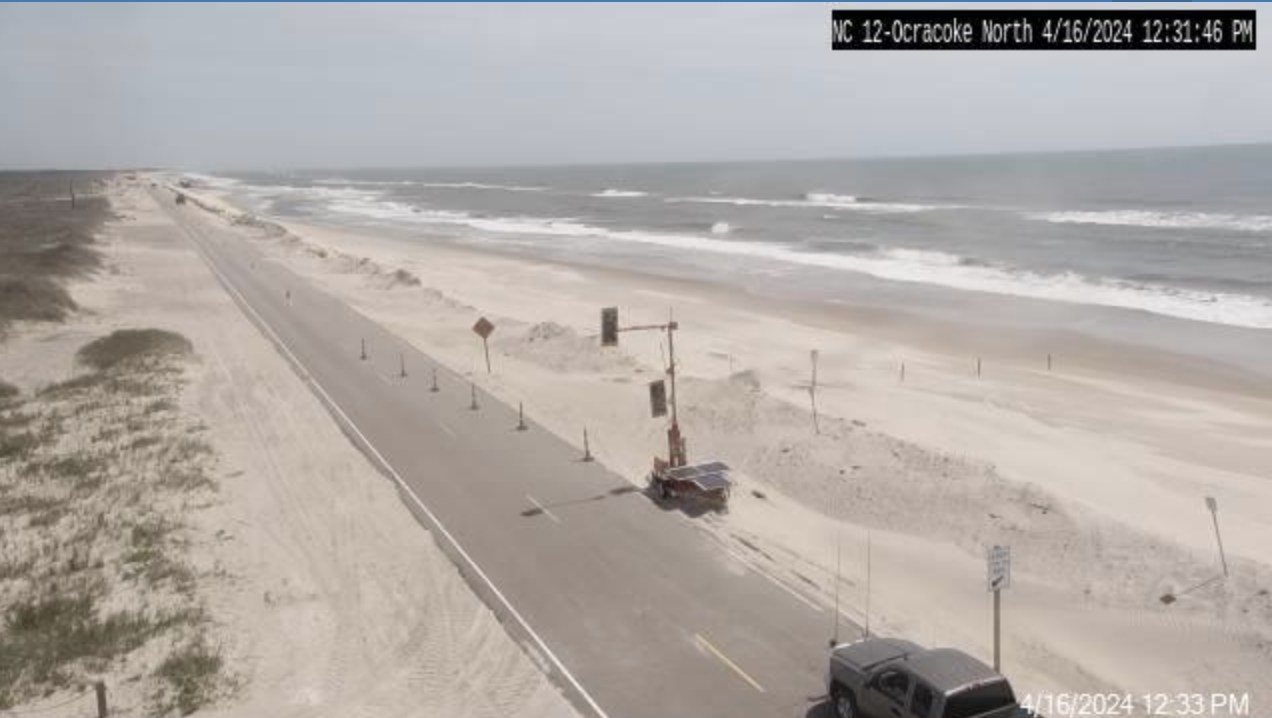
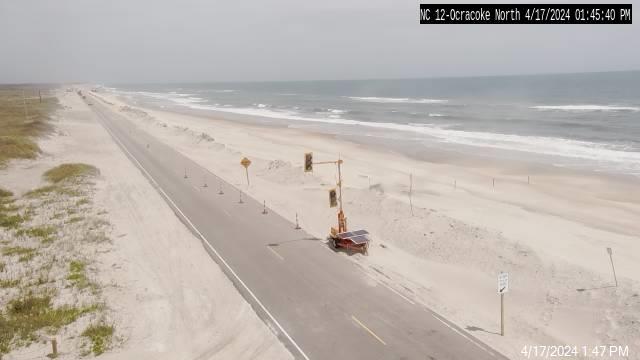
Approximately five dozen scientists have signed on to a letter drafted by Audubon North Carolina which solicited signers to add their support in asking the National Park Service to adopt the “highest degree of protection” listed in the US Geological Survey’s management protocols that include full year round closure to all recreation — both ORV and pedestrians — of Bodie Island Spit, Cape Point, South Beach, Hatteras Spit, North Ocracoke and South Ocracoke.
The protection called for also would limit recreational use of the remainder of seashore under National Park Service control to protect a “zone of the ocean backshore at least 10 meters wide and running the length of the site from recreation. This zone should be adjacent to the toe of the primary dune wherever a primary dune exists (i.e., recreation should be restricted to a corridor between mean high tide line and the edge of the zone of protected backshore)…Management should revert to Option A item 1 if plovers are documented in an area…” states the protocol for piping plovers. Option A item 1 is a complete closure of all potential nesting, roosting and foraging habitat.
At the very least, states the letter, the “moderate level” of protection described in the protocol should be adopted. This measure also would close the areas to ORV use year round and keep boats” outside of 50 meters from the habitat at the sites, where applicable.”
“Pedestrians may be permitted within a narrow walking and sunbathing corridor extending landward from the mean high tide line, from sunrise to sunset, on the oceanside only,” states the protocol.
“Pets, kite-flying, Frisbee and ball-playing, fireworks, wildlife feeding and trash disposal should be prohibited.” The protocol document also notes that the corridor could be narrowed or eliminated if necessary to prevent disturbance to plovers.
Since the letter was discovered by the Outer Banks Sentinel on Audubon’s Internet site earlier this month, that area of the Web site has become password-protected.
The signed letter, dated Dec. 21, 2009, was sent to Mike Murray, superintendent of the Outer Banks Group and copied to Jonathan Jarvis, director, National Park Service (NPS) as well as several other high level NPS employees.
“… scientists working for USGS developed specific protocols for management of certain protected species on the Seashore. We urge you to strictly adhere to the expert guidance presented in scientific studies, conservation plans, recovery plans, and recommendations from experts as you develop the regulation for ORV use on Cape Hatteras National Seashore,” states the letter.
“…We urge the National Park Service to implement the highest level of protection to the extent possible, but certainly no less than the moderate level of protection as described in the USGS protocols.”
Of the signers, several were involved in creating the protocols, some were Audubon employees or board members, and others were scientists working for the federal government in other agencies.
Also signing the letter was Sam Pearsall who, during the reg-neg process, represented The Nature Conservancy. The conservancy eliminated itself from the process by sending a letter to Murray stating that the process wasn’t being based on science. Since that time, Pearsall has left that organization and is now with the Environmental Defense Fund.
In comments from some of the signers attached to the letter, Pearsall stated: “I sign this petition enthusiastically, strongly supporting its intentions and recommendations. I am not an expert on shore birds or turtles, but I have 30+ years of experience in large systems ecology, coastal habitats, and conservation.”
Asked to clarify the reason for The Nature Conservancy leaving the negotiating table, Debbie Crane, spokesperson for The Nature Conservancy, responded by e-mail: “Sam resigned his job here and went to EDF about the time the letter was written. We’ve never filled his position, so there really isn’t anyone here with the expertise he brought to the table on this issue, which was largely centered around counting the species.”
Pearsall did not respond to an e-mail asking for clarification. Emails were sent by the Sentinel to several signers asking if they had read the protocols and if it concerned them that the management documents have not gone through peer review, there is little data, no models and no goals listed.
Christine Bates, fish and wildlife biologist in the Burns District office in Hines, Ore., responded that, yes, she had read the protocols.
“One of the scientists’ mistakes is that they did not estimate the populations obsession with ORV activities. Therefore, we are just starting to set up monitoring protocols for this rapid soil disturbing activity. Funding is a problem and the absence of models, goals and data should be a concern, but it should not stop the decision to have an emergency closure of specific sensitive areas,” wrote Bates.
Funding for studies is often a problem for scientists, wrote Bates. “Sometimes in our data gathering we forget that the ORV groups should complete the data gathering to prove that their activities are not jeopardizing the existence of species that utilize that habitat…
“Therefore, I believe that the ORV groups should be responsible for proving that their activities do not have an effect.
“They should develop the scientifically sound models, goals, and data to prove that they can effectively monitor the activities of every individual…
“…I believe that ORVs are fun and I have one, but areas should be excluded for wildlife protection. When it comes to seashores, there can be a happy medium like Camp Pendleton, CA where the Least Tern has its nesting grounds and the U.S. Marines play everywhere else…”
While the letter writing campaign rages on both sides of the issues, release of the Draft Environmental Impact Statement continues to be expected at some date in the future.
Subject
Name
(required, will not be published)
(required, will not be published)
City :
State :
Your Comments:
May be posted on the Letters to the Editor page at the discretion of the editor.
May be posted on the Letters to the Editor page at the discretion of the editor.
May be posted on the Letters to the Editor page at the discretion of the editor.
May be posted on the Letters to the Editor page at the discretion of the editor.