
Shooting the Breeze
November 24, 2008


First videotaped negotiated
rulemaking meeting is now on the Internet

By IRENE NOLAN


Now you can see and hear for yourselves hours and hours of discussion by the National Park Service’s negotiated rulemaking committee, as it continues its struggle to formulate a long-range, off-road vehicle regulation for the Cape Hatteras National Seashore.

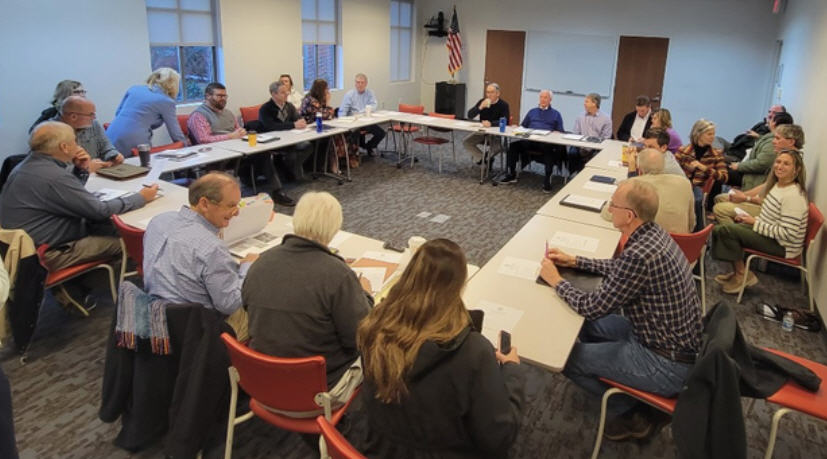
The eighth meeting of the group, Nov. 14 and 15, at the Wright Brothers National Memorial in Kill Devil Hills was recorded by Dare County and now appears on Charter Cable’s government channel 20 and on the county’s Web site.

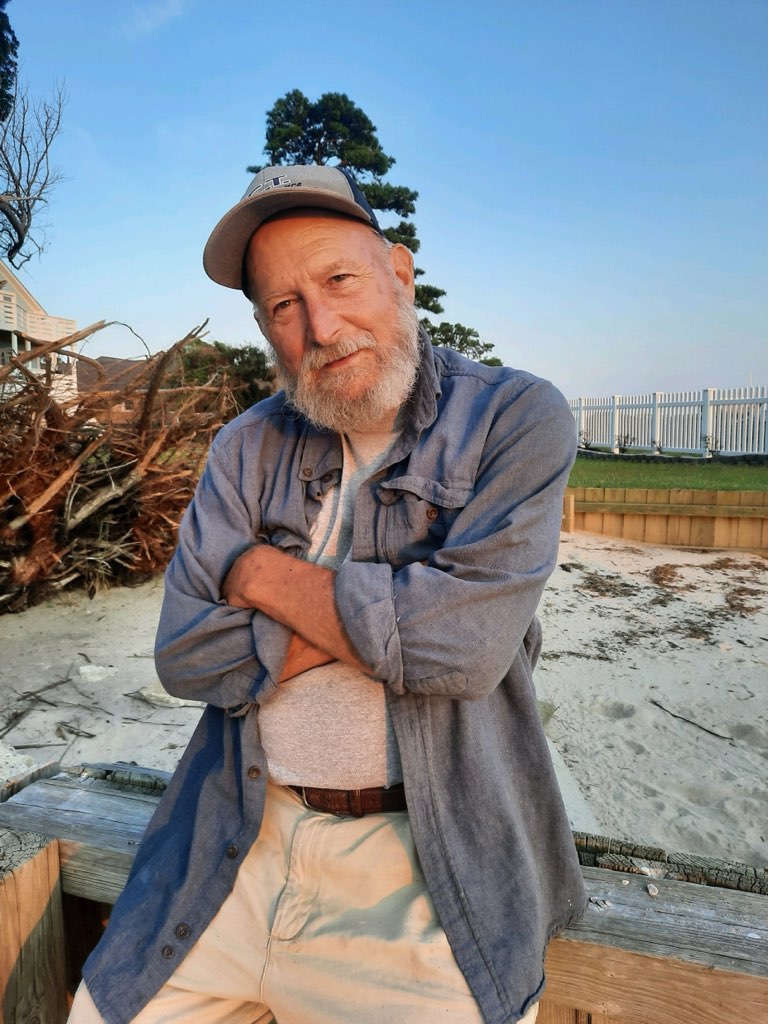
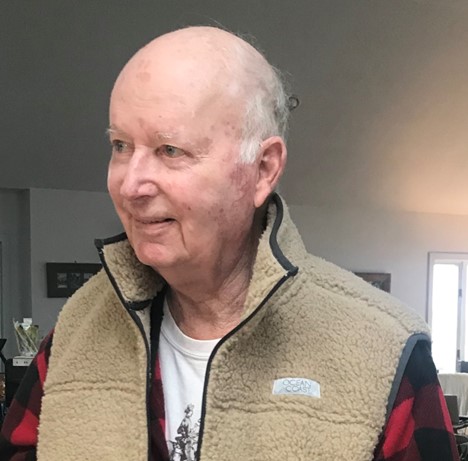
“The videotaping of the regulatory negotiation (RegNeg) process is the most publicly useful event that has happen so far in the highly dysfunctional ORV planning process,” said Dr. Michael A. Berry of Chapel Hill.

Berry has attended many of the RegNeg meetings this year and offered his public comment at several.  He has a Ph.D. in public health and was a manager and scientist with the Environmental Protection Agency, where he had extensive contacts with government agencies, the courts, and environmental organizations.

“The videotaping provides the only opportunity that many concerned citizens, near and far, have for viewing the RegNeg meetings now inconveniently held in a highly secured federal facility in Kitty Hawk. Nine public meetings were held this past year.  The videotaping of Nov. 14 and 15 provides the only complete and unedited public record of a RegNeg meeting.”

The road to videotaping the public meetings to make them more accessible to the public was not an easy one.

The decision by Cape Hatteras National Seashore Superintendent Mike Murray to allow videotaping of the public negotiated rulemaking committee meetings was controversial and opposed by some committee members.

The 29-member negotiated rulemaking committee includes stakeholders on all sides of the ORV issue – from those who want free and open access for vehicles, to environmental groups that want to severely limit beach driving, to other groups that fall somewhere in between.

However, the first videotaping of a meeting went smoothly and was apparently successful. Murray, the designated public official who leads the committee, and many committee members were pleased.

“I thought the videotaping went well,” Murray said.  “The cameras were unobtrusive and proved to be a non-issue in terms of negatively affecting people’s behavior or meeting dynamics. I was pleased with how it went and heard no negative comments or concerns about it.”

Murray wasn’t always sure that videotaping the meetings was a good idea.
Before the first official meeting of the committee last January, members were told that the meeting would not be videotaped.  Murray has said that was because the National Park Service didn’t have money in its budget to pay for it.

However, as the meetings progressed and became more contentious, some committee members and observers thought the meetings should be taped to make them more available to the public and to provide a public record of a public proceeding.

One of those is Warren Judge, chairman of the Dare County Board of Commissioners who is a member of the negotiating committee.

Judge believes that the RegNeg process needed to be more transparent and more accessible to county residents and to visitors who have a stake in the outcome of the effort to make a long-term rule on ORV use on the seashore. The committee’s meetings, usually over two days, last all day, and many who would like to view the proceedings cannot take time off from their businesses or employment – or, in the case of visitors, cannot take time to travel here.

In late July, he said, he made an offer to the Park Service.  That offer was that Dare County would pay for taping the meetings, if allowed.

Nothing much happened to his offer until the September committee meeting, when Murray put the question before the committee.  He asked which members would favor taping the meeting and who would oppose it.

Six committee members were opposed.

Their concerns included that the videotaping of the group would not be constructive to the already contentious process and that members would be intimidated about speaking or would grandstand. There was also some concern about the privacy of committee members, several of whom have said they felt intimidated or threatened during the process.

Murray spent several months mulling those concerns.  He especially was unsure that he wanted to change the ground rules for the committee at this late date. Members, he noted, were told there would be no taping.

In early November, Murray announced that he would allow the videotaping.

“This has been a very difficult decision,” said Murray. “I believe the concerns expressed about potential negative impacts of videotaping are real.  After careful consideration and consultation with many, I have determined that the benefits of permitting videotaping do outweigh the real costs.  Based on the e-mail messages and phone calls that we receive on a regular basis, there is a need for accurate information about beach access, the negotiated rulemaking process, and the legal mandates that must be met by NPS in the ORV management plan.

“Videotaping will allow many more people to observe the meeting discussion, hear the different points of view, and judge them for themselves,” Murray added. “Ultimately, NPS must weigh the benefits of transparency and broad public outreach against the effectiveness of the committee and its intent and purpose.  NPS has determined that potential benefits of videotaping outweigh the potential negative impacts on the negotiation process.”

Dare County, on short notice, set up the videotaping of the meetings by Boyer Video, Inc., which is owned by Robert Boyer of Frisco. Boyer provides videotapes of the meetings of the Dare County and Nags Head boards of commissioners. He provided all of the equipment and did the filming with two assistants.

Dorothy Toolan, Dare County’s public information director, said that the cost to the county is $1,000 per day for the meetings.

There are six – and maybe seven – more days of meetings planned.  The total cost for the county will be about $9,000.

“It went very well,” said commission chairman Judge. “I do not think it bothered anyone and it probably improved behavior.  I sense that no one was inhibited from talking.”

Judge also noted that he saw more men wearing coats and ties or sport jackets.

“I do not know if this was a coincidence or because they were going to be on television,” Judge added.  “Again, that is the only thing that I can tell you caught my eye or ear with the presence of the camera.”

Other committee members agreed.

“The videotaping appeared to be professionally done and did not appear to impede committee deliberations or chill people from speaking,” said Jason Rylander, attorney for Defenders of Wildlife and one of the committee members who initially opposed the taping.

Rylander added that he continued to have concerns “that people will use the videotape, or excerpts thereof, inappropriately or out of context in political advertisements or on their Web sites.”

“I have no problem with people seeing what's going on,” he said. “I want as much information as possible in the public domain to counter some of the propaganda that's out there. I think it is important that folks understand what the Park Service is proposing. The final rule will probably be something like one of those alternatives (especially if the committee cannot agree) and people need to understand what the legal constraints are and what kinds of changes are coming.”

“I had no problem with the video from a personal viewpoint,” said Jim Lyons, who represents the Cape Hatteras Recreational Alliance on the committee. “Videoing is really no big deal when the meetings are open to the public anyway….I think it’s correct that the public get a chance to view the proceedings through the county link.”

“Videotaping went just fine,” said John Couch, president of the Outer Banks Preservation Association, which advocates for free and open access. “I don’t think it affected the process….Bob Boyer can do magic.  He is a class act.”

“It followed my experience in the corporate world,” said Jeffrey Wells, a committee member who represents the Hatteras Landing Homeowners Association. “After a few hours, it was unnoticeable and not distracting.”

Wells also added that the meetings were “the most civil and productive to date.” And he said the public comment periods were “the most sophisticated and well prepared ones to date.”

“The videotaping does not in anyway discouraged the participation of RegNeg members,” Mike Berry said. “In fact, it is quite evident to those of us who have observed the posturing, stall tactics, and foot-dragging of some RegNeg members in past meetings, that the videotaping encourages participation, constructive comments, and elevated professional demeanor of members.”

Berry added that the videotapes help the public to understand why the “all-or-nothing” consensus formula of the RegNeg process will never work with a group of 29 diverse stakeholders, “especially in the face of the consent decree and a severely ruptured trust levels.” 

“Even though several Reg-Neg members worked diligently, over many weeks, in the public interest to provide a constructive framework for public safety and a sensible, education based, ORV permit program,” he said, “the group could not even reach consensus on a single minor point.  A wasteful hour-long discourse tried to reach agreement on what constitutes a ‘narrow beach.’ Not even that simplest concept like ‘narrow beach’ could be agreed upon. One would think that, like pornography, you know a narrow beach when you see it.”

The sometimes excruciatingly detailed and contentious nature of the negotiations will be obvious if you watch the meetings on cable or on the Dare County Web site.

The videotapes can be seen on the government channel on Charter Cable.  For a schedule, go to http://darenc.com/depts/PR/Ch20cal.pdf

You can also go to the county Web site at http://www.darenc.com.  Click on videos of the negotiated rulemaking committee on the home page.

Viewing the RegNeg videos is not recommended for those with a short attention span.

The cable viewing has been broken into four segments over the two days of meetings.

On the Web site, there are five segments for the first day and two for the second – for a total of more than nine hours.

Even if you can’t watch all of it, if you are interested in the process and the outcome, try to watch what you can.

The next meetings of the negotiated rulemaking committee are scheduled for Dec. 11-12, Jan. 6-7, Jan. 21-22, and a final meeting on Feb. 3, if it is needed.  All of the meetings will be in the pavilion of The Wright Brothers National Memorial in Kill Devil Hills.  Public comment periods are usually at noon on both days and at 5 p.m. on the first day of the meetings.

Unless there is a problem with future videotapes, you will be able to watch all of the proceedings on cable or on the Internet.


 Comments are always welcomed!


     Subject :

     Name :  (Fist and Last Name required)

     Email :  (required, will not be published)

     City :   (required)    State :   (required)

     Your Comments:

May be posted on the Letters to the Editor page at the discretion of the editor.